

Table of Contents
- What Makes Durable Outdoor Clothing Worth the Investment
- Best Fabrics for Outdoor Workwear and Everyday Field Use
- Denier Rating Explained for Clothing Durability
- Construction Details That Separate Long-Lasting Gear from Throwaways
- How to Choose Durable Outdoor Clothing That Fits Your Activity
- How to Wash Technical Outdoor Gear Without Wrecking It
- Tips for Extending the Life of Your Outdoor Apparel
- Conclusion
Last Updated: August 18, 2026
What Makes Durable Outdoor Clothing Worth the Investment
Durable outdoor clothing is gear built to withstand repeated exposure to weather, abrasion, and hard use without breaking down after a season or two. The difference between throwaway apparel and something that lasts five years comes down to materials, construction, and whether the piece was designed for actual field conditions.
At g&s Essentials, we hear from customers regularly: they bought something that looked solid online, wore it a handful of times, and watched the seams pull apart or the zipper fail at the worst possible moment. The investment in genuinely durable gear pays off not just in longevity but in performance when it counts.
Over a three-year period, a single well-made piece almost always costs less per use than cycling through two or three budget replacements. Higher-quality outdoor apparel uses heavier fabric weights, reinforced stress points, and hardware that can handle cold temperatures without seizing.
According to the Outdoor Industry Association's consumer research, outdoor apparel is one of the fastest-growing segments in retail, which means the market is flooded with options that range from genuinely field-tested to purely aesthetic. Knowing what separates the two is the skill this guide is designed to give you.
Best Fabrics for Outdoor Workwear and Everyday Field Use
The fabric is where durability starts. Everything else, construction, hardware, fit, depends on having a base material that can handle the stress you're going to put it through.
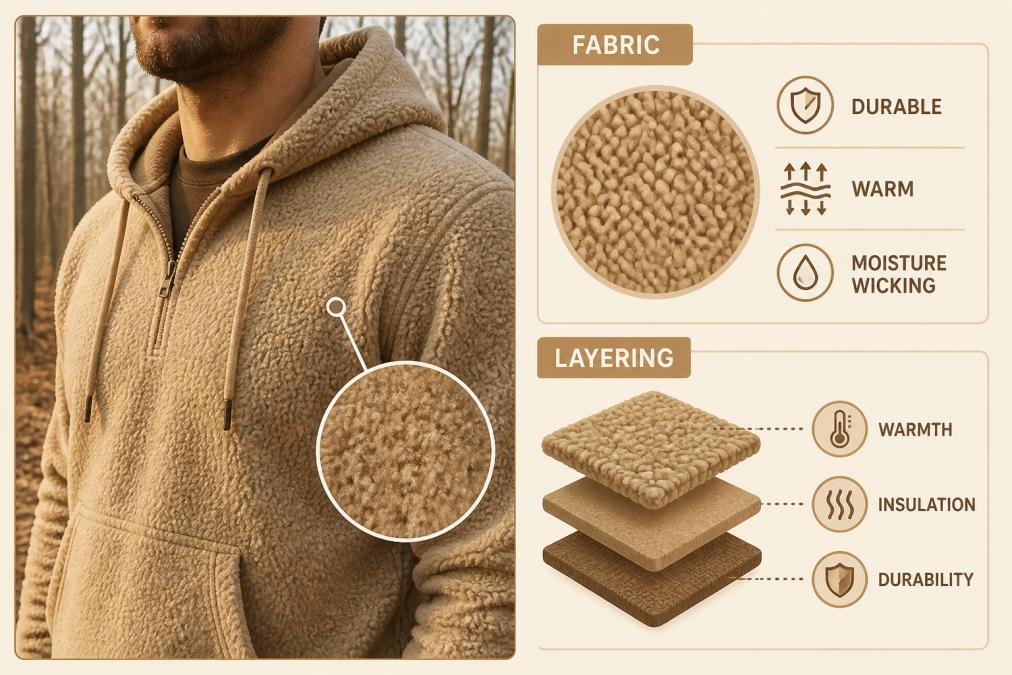
The best fabrics for outdoor workwear balance abrasion resistance, moisture management, and tensile strength. No single fiber does all three perfectly, which is why most technical outdoor apparel blends materials.
Natural Fibers vs. Synthetics: Which Holds Up Longer
Wool, particularly merino, is remarkably resilient for a natural fiber. It resists odor naturally, regulates temperature across many conditions, and handles repeated washing without losing its structure. The limitation is abrasion resistance: wool will pill and wear through faster than most synthetics when rubbed against rough surfaces like tree bark or pack straps.
Cotton is comfortable in dry conditions but is the worst choice for technical outdoor use. Once wet, it stays wet and pulls heat from your body, making it a liability for field work in variable weather.
Nylon and polyester are the workhorses of durable outdoor clothing. Nylon offers exceptional abrasion resistance and tensile strength for outerwear shells and reinforcement panels. Polyester holds its shape well, dries fast, and resists UV degradation better than nylon over time. Many durable outdoor garments use a nylon shell with polyester insulation or lining.
Blended fabrics often outperform pure fibers. A cotton-polyester blend gives you comfort with improved moisture wicking and faster dry time. Nylon-spandex blends add stretch without sacrificing abrasion resistance.
Fleece and Midlayer Materials for Cold-Weather Performance
Fleece is the standard midlayer for cold-weather outdoor use. It traps body heat efficiently, dries faster than wool, and holds up to repeated washing without significant degradation. The key variable is fleece weight, typically described as 100, 200, or 300 weight.
- 100-weight fleece: Lightweight, packable, best as a base layer or light midlayer in mild conditions
- 200-weight fleece: The most versatile option, warm enough for most cold-weather field use without being bulky
- 300-weight fleece: Maximum warmth, best for stationary cold-weather activities like ice fishing or stand hunting
The Rack & Ridge hoodies in the g&s Essentials lineup use fleece construction built for cold-weather outdoor performance. The Chase the Rut Hoodie and the Earn Your Antlers Hoodie are designed as genuine field layers, not just casual wear with outdoor graphics. For anyone spending time in a stand or blind when temperatures drop, a quality fleece midlayer is the piece you'll reach for most.


Denier Rating Explained for Clothing Durability
Denier is a unit of measurement that describes the weight and thickness of individual fibers in a fabric. Specifically, it measures the mass in grams of 9,000 meters of a single fiber. A higher denier number means a heavier, thicker, and generally more abrasion-resistant fabric.
Here's how denier rating maps to practical durability in outdoor apparel:
| Denier Range | Fabric Weight | Typical Use | Durability Level |
|---|---|---|---|
| 20-40D | Ultralight | Packable shells, liners | Low-moderate |
| 50-70D | Lightweight | Softshells, active layers | Moderate |
| 100-150D | Midweight | Pants, work shirts, jackets | Good |
| 200-500D | Heavyweight | Reinforcement panels, bags, workwear | High |
| 500D+ | Industrial | Extreme-use outerwear, tactical gear | Very high |
For most hunting and outdoor field use, look for fabrics in the 100-200D range for main panels. High-wear zones like knees, elbows, and seat panels should be reinforced with 200D or higher material.
According to the American Textile Manufacturers Institute's fiber standards, denier is one of the most reliable objective indicators of fabric durability available to consumers. Most retail garment labels don't publish denier ratings directly. A practical workaround: feel the fabric between your fingers. Heavier, denser fabric almost always indicates a higher denier.
Construction Details That Separate Long-Lasting Gear from Throwaways
The fabric can be excellent and the garment can still fall apart in six months if the construction is poor. A common mistake is evaluating only the outer material without checking how the pieces are assembled.
Seam Stitching and Reinforcement Points
Seams are where garments fail first. Stitch type and thread quality determine seam longevity.
Flatlock seams lie flat against the fabric and distribute stress across a wider area, reducing the chance of tearing under tension. They're standard in technical outdoor apparel.
Bartack stitching at stress points, pocket corners, zipper base points, and belt loop attachments, is a non-negotiable indicator of durability. Bartacks are tight, reinforced stitch clusters that prevent tears from propagating.
Double-needle stitching on hems and cuffs adds a second line of thread, so even if one line breaks, the hem holds. Single-needle stitching is a cost-cutting measure that shows up as fraying within a year of regular use.
Turn the garment inside out before buying. The quality of interior finishing tells you more about construction standards than the outside ever will.
Zipper and Hardware Quality
Zippers are the single most common failure point in outdoor apparel. A jacket with a failed main zipper is functionally useless.
YKK is the industry benchmark for zipper quality, and their presence on a garment is a reliable signal that the manufacturer paid attention to hardware. Coil zippers handle cold better than molded plastic teeth, which can become brittle and crack in sub-freezing temperatures. For outerwear intended for winter hunting or cold-weather field work, metal or coil zippers are worth specifically seeking out.
Snaps, buttons, and drawcord hardware deserve the same scrutiny. Plastic hardware that feels hollow or lightweight will crack under cold stress. Metal hardware costs more but survives repeated use in real conditions.
How to Choose Durable Outdoor Clothing That Fits Your Activity
Choosing durable outdoor clothing correctly means matching the garment's construction to the specific demands of your activity, not buying the most technical option available.
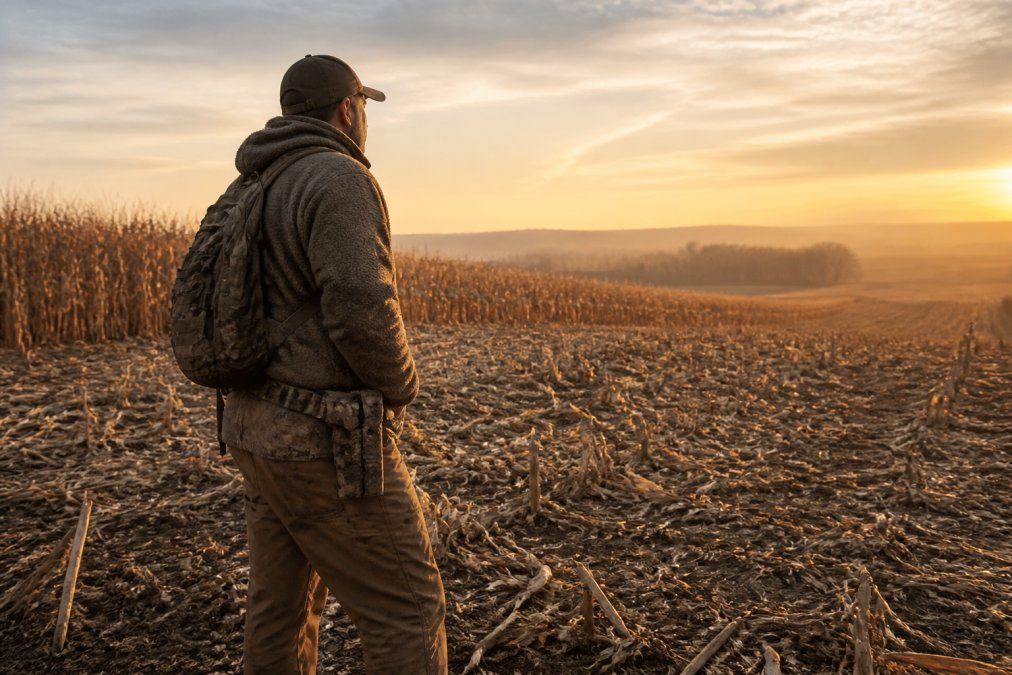
Different outdoor activities put stress on different parts of a garment. A deer hunter spending hours in a stationary stand needs maximum warmth and quiet fabric. Someone doing upland bird hunting needs articulated knees, abrasion-resistant brush pants, and layering flexibility. A farmer or ranch hand doing daily outdoor work needs durability at stress points, easy care, and range of motion.
The practical framework for choosing correctly:
- Identify your primary stress factor: Is it cold, wet, abrasion, or movement restriction?
- Match fabric weight to activity intensity: High-output activities generate body heat; stationary activities require more insulation
- Check reinforcement placement: Reinforcements should be where your activity actually puts stress
- Evaluate layering compatibility: The piece should work with what you already own
- Prioritize fit for range of motion: Outdoor apparel that restricts movement in the field is a safety issue
For hunters and outdoorsmen who want apparel that performs without looking purely utilitarian, the Rack & Ridge collection from g&s Essentials threads that needle. The Rack & Ridge Outdoor Hoodie and the Hunt Hard. Live Wild. Hoodie are built as functional field layers with design that doesn't look out of place off the land.
How to Wash Technical Outdoor Gear Without Wrecking It
Washing is where a lot of technically sound outdoor apparel gets destroyed prematurely. The wrong detergent, water temperature, or drying method degrades fabric coatings, compresses insulation, and breaks down fiber structure faster than field use ever would.
The core rules for washing technical outdoor gear:
- Use a technical or sport-specific detergent: Standard household detergents contain optical brighteners and residue-building agents that clog the pores of moisture-wicking fabrics and degrade DWR coatings. A dedicated technical wash like Nikwax preserves fabric performance.
- Wash in cold water on a gentle cycle: Hot water degrades synthetic fibers and can cause shrinkage in blended fabrics.
- Never use fabric softener on technical gear: Fabric softener coats fibers with a conditioning layer that destroys moisture-wicking properties.
- Turn garments inside out: This protects outer fabric coatings and reduces pilling from friction.
- Air dry when possible: Tumble drying degrades elastic fibers, DWR coatings, and fleece pile over time. For fleece, low-heat tumble drying with dryer balls can restore loft.
As documented in care guidelines from the American Cleaning Institute, following manufacturer care labels is the single most effective way to extend textile lifespan. The label reflects how the specific fiber blend and construction respond to washing conditions.
Tips for Extending the Life of Your Outdoor Apparel
Durability isn't just about what you buy. How you treat gear between uses determines whether a five-year piece lasts ten or wears out in three.
Store gear properly. Compressing fleece or insulated pieces for extended periods collapses the loft that provides warmth. Hang insulated layers or store them loosely. Keep outerwear away from prolonged direct sunlight, which degrades synthetic fibers.
Address damage immediately. A small tear at a seam that gets ignored becomes a large tear after one more use. Field repair kits with seam tape and fabric patches are inexpensive and extend garment life significantly.
Reapply DWR coatings when water stops beading. Durable water repellent treatments wear off with use and washing. When you notice water soaking into your shell fabric rather than beading off, the DWR is spent. Wash-in and spray-on DWR products restore the coating without requiring a new garment.
Rotate your gear. Wearing the same piece every day accelerates wear at stress points. Having two functional layers and rotating them extends the life of both.
Spot clean when possible. Full machine washing is harder on fabric than spot cleaning. For minor dirt and odor between uses, a damp cloth and targeted cleaning keeps gear fresh without the mechanical stress of a full wash cycle.
The underlying principle is that durable outdoor clothing rewards attention. Gear that gets inspected, cleaned properly, and repaired promptly lasts significantly longer than identical gear that gets thrown in a corner between seasons.
Frequently Asked Questions
What fabrics are most durable for outdoor clothing?
Nylon and polyester are the most durable synthetic options for outdoor clothing. Nylon resists abrasion better, making it ideal for pants and outerwear that contact brush or terrain. Polyester holds its shape and dries faster. Wool, particularly merino, is the most durable natural fiber and resists odor well. Avoid 100% cotton for active outdoor use, it absorbs moisture and takes a long time to dry, which shortens the garment's functional life in wet or cold conditions.
How does denier rating affect clothing durability?
Denier measures how heavy the individual threads in a fabric are. A higher denier number means thicker, heavier threads and a tougher fabric. For durable outdoor clothing, look for at least 200D in pants and 70D or higher in jackets. Lightweight hiking gear often runs 30D to 50D, which packs small but tears more easily. For hunting, field work, or any activity involving brush and rough terrain, prioritize higher denier fabrics over lighter packable options.
Is it worth spending more on durable outdoor apparel?
For people who spend real time outdoors, hunting, fishing, farming, or working the land, yes. A well-built piece of outdoor clothing can last five to ten seasons with proper care, while cheaper alternatives often fail within a year of hard use. The cost per wear on a quality garment is almost always lower than replacing budget gear repeatedly. Look for reinforced seams, quality hardware, and purpose-built fabrics rather than paying for logos or marketing.
How should I care for my outdoor clothing to make it last longer?
Wash technical outdoor gear in cold water on a gentle cycle using a detergent made for performance fabrics, standard detergents strip water-repellent coatings over time. Avoid fabric softener entirely. Tumble dry on low or air dry when possible. For DWR-coated shells, a short low-heat dryer cycle after washing can reactivate the coating. Store gear clean and dry, away from direct sunlight, which degrades synthetic fibers faster than use does.
Choosing gear that holds up in the field is harder than it should be, given how many options are built more for appearance than performance. g&s Essentials built the Rack & Ridge collection specifically for people who need apparel that works as hard as they do, with fleece construction, quality hardware, and designs that carry genuine outdoor credibility. Browse the Rack & Ridge lineup and join our email list to get updates on new arrivals built for the land.
This article was written using GrandRanker